
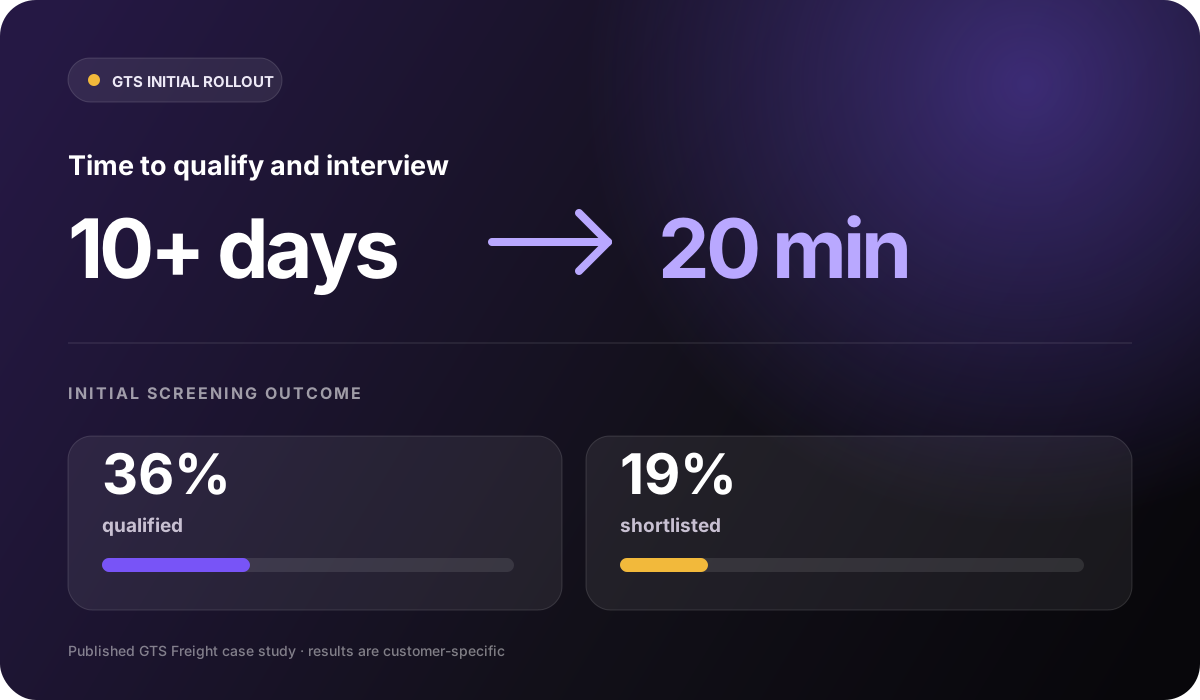

From 10+ days to 20 minutes
In its documented initial rollout, GTS reduced qualification and interview time from more than 10 days to 20 minutes. This measures the first screening stages, not the time to a completed hire.
Read the GTS case studyTransportation and logistics hiring
Bring SEEK applications into the right role. Collect licence evidence, compare each CV with the job, and invite suitable candidates to AI screening interviews. Your hiring team reviews the evidence and decides the next step.
Transport hiring workflow
Multi-location MC driver hiring

Candidate experience in the GTS rollout
“It was really a good experience with you.”
Build your transport hiring workflow
Use a consistent first screen across locations. Your hiring team verifies the evidence and decides the next step.
Map each SEEK job to the right role or add a candidate manually. Separate workflows can support different locations and driver routes, so every application starts with the right form, criteria, and communication sequence.
Keep applications visible while tailoring the process to each depot and role.
Mapped candidate intake
Step 01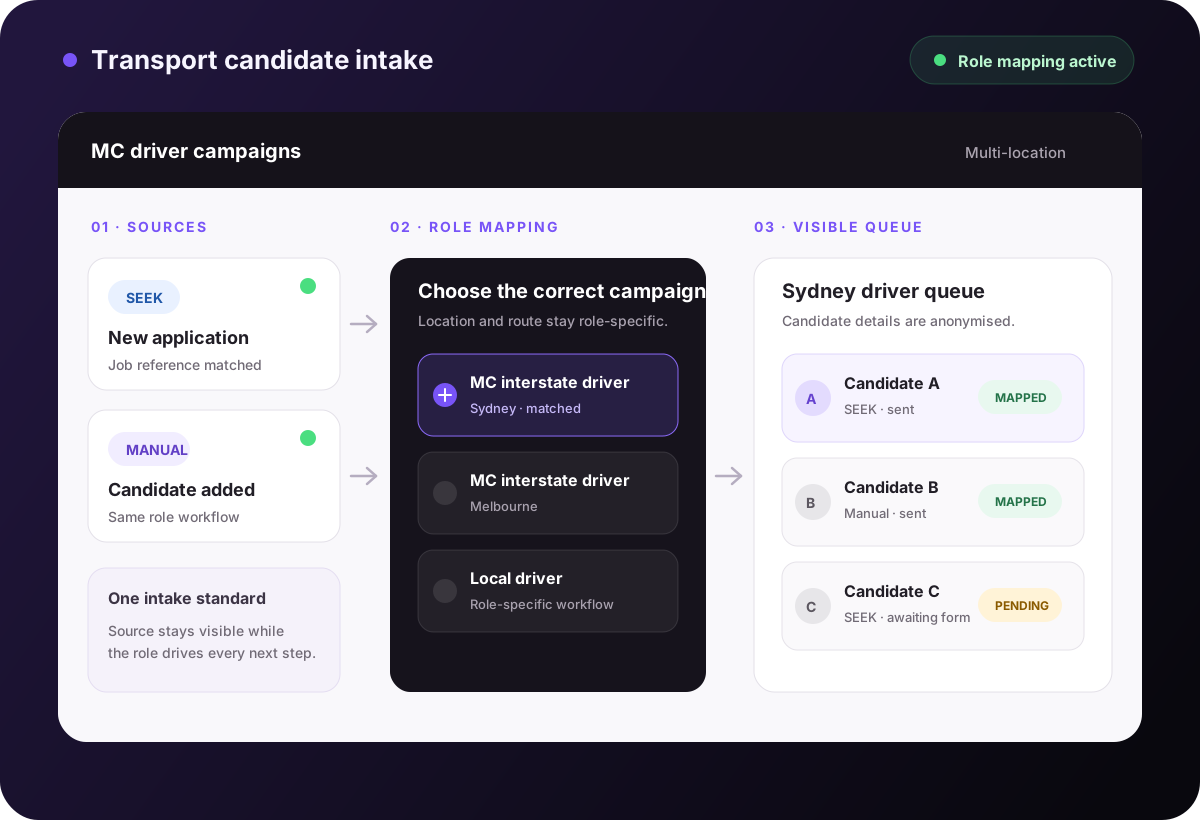
SEEK and manually sourced candidates enter the correct location-specific driver workflow.
Collect licence images, road-authority records, fatigue-management accreditation, work rights, availability, CVs, and required consent in a role-specific form. Apply approved job-related rules to progress, hold, or flag the application while your team retains responsibility for document verification.
Your hiring team has the required evidence before the first call.
When AI screening interviews are enabled for the role, invite suitable candidates to a structured interview they can complete on their schedule. Questions can explore safety, vehicle checks, load restraint, and relevant driving experience without waiting for a screening call.
Keep the next step moving across shifts, locations, and weekends.
Compare the CV with the active job description, then review TalentFit strengths, gaps, and concerns alongside the recording, transcript, Green/Amber/Red assessment, and question-level evidence. Your team controls the next stage.
A shortlist your hiring team can review and explain.
Ready to map your first transport role?
Start with one driver route, define the evidence and human review points, then measure your own qualification and interview cycle.
Customer outcomes across Skill Society
In its documented initial rollout, GTS reduced qualification and interview time from more than 10 days to 20 minutes. This measures the first screening stages, not the time to a completed hire.
Read the GTS case study

Sands Fridge Lines used configured screening rules and document collection across driver, pick-packer, and graduate logistics roles. Its team remained responsible for verifying evidence and hiring decisions.
Read the Sands Fridge Lines case study

Pet Circle used on-demand AI interviews for high-volume blue-collar hiring, with 39% of candidates completing interviews after hours.
Read the Pet Circle case studyStart where GTS started
GTS’s published results came from its configured initial rollout across application capture, qualification, AI screening interviews, and shortlisting. Your outcome will depend on role, volume, criteria, and process—so start with one route and measure what changes.
Questions, answered
Start with the role requirements, the evidence your team needs, and the verification steps in your hiring process.
SEEK applications can be mapped into the correct Skill Society role workflow, while candidates can also be added manually. The exact handoff depends on your setup; GTS used a structured SEEK intake as part of its rollout.
Yes. Each role can use its own application fields, job description, pre-qualification rules, interview questions, timing, and communication flow. That lets a line-haul role differ from a local or short-haul role without losing consistency within each campaign.
A configured application can collect CVs, licence images, road-authority records, fatigue-management accreditation, work rights, availability, consent, and other role-relevant documents or declarations. Your requirements should be lawful, necessary, and appropriate for the role.
No. Skill Society collects candidate answers and requested documents, applies your configured routing rules, and flags responses for review. Your hiring team verifies document validity and remains responsible for legal requirements and hiring decisions.
Yes. When AI screening interviews are enabled for a role, candidates can complete the structured interview on mobile or desktop without booking a screening call. In GTS’s initial rollout, 40% of candidates interviewed outside working hours.
Depending on the configured workflow, your hiring team can review the application evidence, CV-to-job TalentFit report, recording, transcript, overall assessment, question-by-question analysis, strengths, gaps, concerns, and workflow stage controlled by your hiring team together.
Your hiring team makes the decision. Skill Society organises application and interview evidence to support their review.
No. The move from more than 10 days to 20 minutes measures qualification and interview in GTS Freight’s documented initial rollout, not the time to a completed hire. Your result will depend on applicant volume, role design, evidence requirements, team process, and the workflow you configure.